
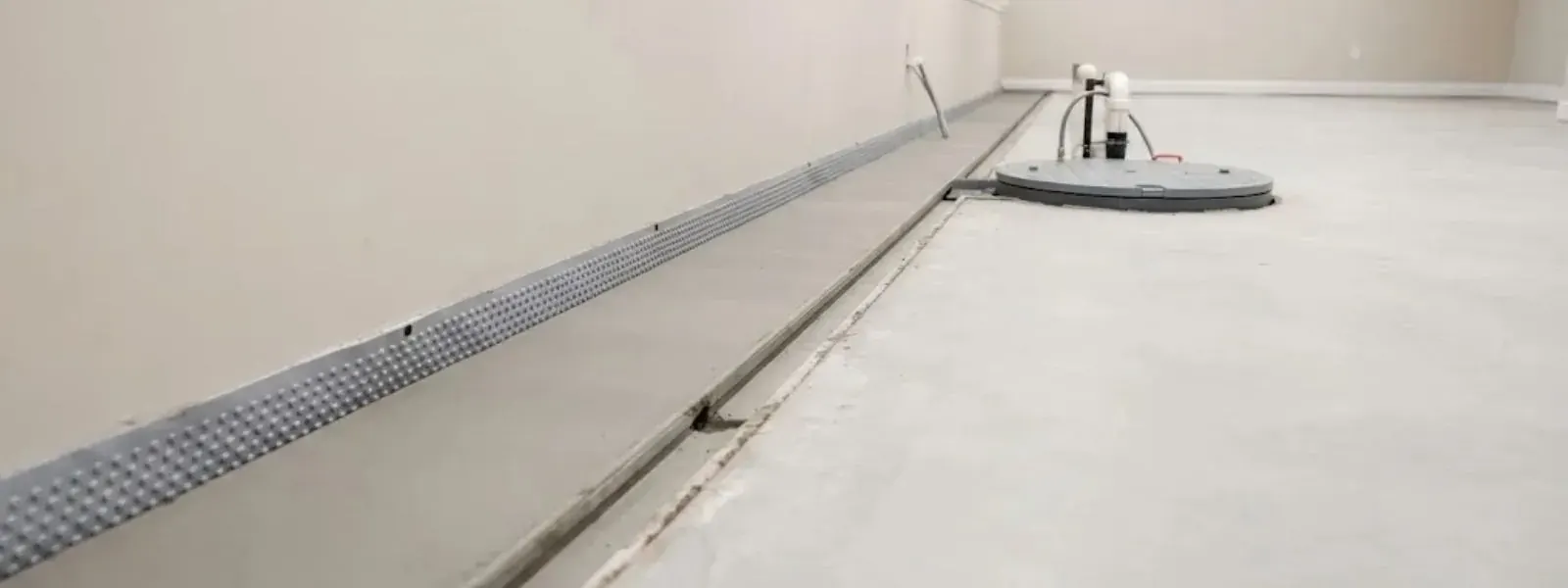
Basement waterproofing in Romeoville, IL starts with finding out how the water gets in. A damp patch on one wall, a puddle at the floor edge and a film of moisture across the slab are three different problems. Treating them all with the same coat of sealer is why so many basements stay wet.
Where the water comes from
Water reaches a basement in four main ways. It seeps through porous block or poured concrete. It pushes up through the joint where the floor meets the wall. It rises through cracks in the slab when the ground below is saturated. Or it comes from a leaking pipe that only looks like groundwater.
We test for that last one first. A plumbing leak is a pipe repair and not a waterproofing job, and a quick check of the meter and the supply lines saves money on the wrong fix.
| Where you see it | Likely path | Common approach |
|---|---|---|
| Along the bottom of a wall after rain | Water pushing in at the floor and wall joint | Interior drain channel to a sump basin |
| Damp or chalky white patches on block walls | Moisture moving through porous masonry | Interior drainage and a wall-side vapor barrier |
| Wet slab in the middle of the room | Groundwater under the floor | Sub-slab drain tile with a sump pump |
| Standing water around the sump pit | Pit undersized or pump overwhelmed | Larger basin or a second pump |
| Wet basement with a dry exterior | Supply, drain or appliance leak | Leak detection and pipe repair |
How interior drainage works
We cut a narrow trench along the inside of the footing and lay perforated drain tile in clean stone. The tile catches water at the point where it enters and carries it to a sump basin. A pump then lifts the water out and discharges it away from the house.
The floor is patched with new concrete over the trench. The system works with the water instead of trying to hold back groundwater from the outside, which would require digging up the yard and the foundation.
- Perforated drain tile set in washed stone along the footing
- A sealed sump basin with a lid, set below the slab
- A pump with a check valve and a discharge line routed away from the foundation
- An optional battery backup for storms that knock out power
- A wall-side barrier or channel where block walls weep
What waterproofing does not do
Drain tile and a pump manage water. They do not fix a bowed wall, a settling foundation or a large structural crack. If we see signs of movement, we say so and suggest you call a structural engineer or foundation specialist before spending money on drainage.
Paint-on sealers can hide a damp wall for a season, then peel off when pressure builds behind them. We do not use a coating as the only fix for active seepage.
Signs the basement needs a drainage plan
- Musty smell that gets worse after rain
- White mineral deposits on walls or the floor edge
- Peeling paint or bubbling wall finish
- Stored boxes that feel damp or grow mold
- Water at the floor edge that returns each wet season
- A sump pump that runs for hours but the basement still gets wet
Water coming in tonight?
Call the 24/7 line. We can protect the area, check your pump and plan permanent drainage once the water is under control.
Call (630) 822-9290Why Romeoville basements stay damp
Romeoville sits in low, flat country close to the Des Plaines River and the Illinois and Michigan Canal. In ground like this, water has little slope to run off and soaks down instead. After a thaw or a string of wet weeks, the water table can press on foundations and slabs.
In a finished basement, block walls take in more moisture than poured concrete. A wall that looks fine can still wick water into carpet or drywall. Ask us to check behind finished walls if a musty smell lingers.
Gutters, grading and downspouts
Part of the solution is outside the house. Downspouts should empty several feet from the wall. The soil near the foundation should slope away. Fixing these costs little and cuts the water the drain tile has to move.
What changes the price
- Length of the wetted wall
- Drainage along one wall costs less than a loop around the whole basement.
- Slab thickness and floor finish
- Cutting through thick concrete or a finished floor adds labor and patching.
- Sump basin and pump
- A larger basin, a second pump or a battery backup raises the total but adds protection.
- Wall type
- Block walls often need weep channels or a barrier that poured walls do not.
- Access and cleanup
- Tight stairs, stored belongings and finished walls change the work plan.
The pump at the heart of the system is covered on our sump pump repair page. If a leaking pipe turns out to be the cause, leak detection finds it without opening the wall more than needed. If the water is coming back up through floor drains, sewer line cleaning may be the answer. We also work in Lockport.
Basement waterproofing questions from Romeoville homeowners
A sump pump removes water that collects in a basin. Waterproofing is the system that guides water to that basin, usually with drain tile along the footing.
Yes. Interior drain tile and a sump basin are the most common approach because they do not require digging around the outside of the house.
Not by itself. Sealer can slow dampness from porous block, but active water pressure will push it off the wall. It works best alongside drainage.
Shut off every fixture and watch the meter. If it moves, a pipe may be leaking. If it holds still and water appears after rain, the cause is groundwater.
Yes. The emergency line is staffed every hour of every day. We can check the pump and stop the active water, then talk about long-term drainage once things are dry.
It does. Wet drywall and carpet grow mold fast, so dry them early. If drainage is added later, we plan the trench to limit damage to finished areas.