
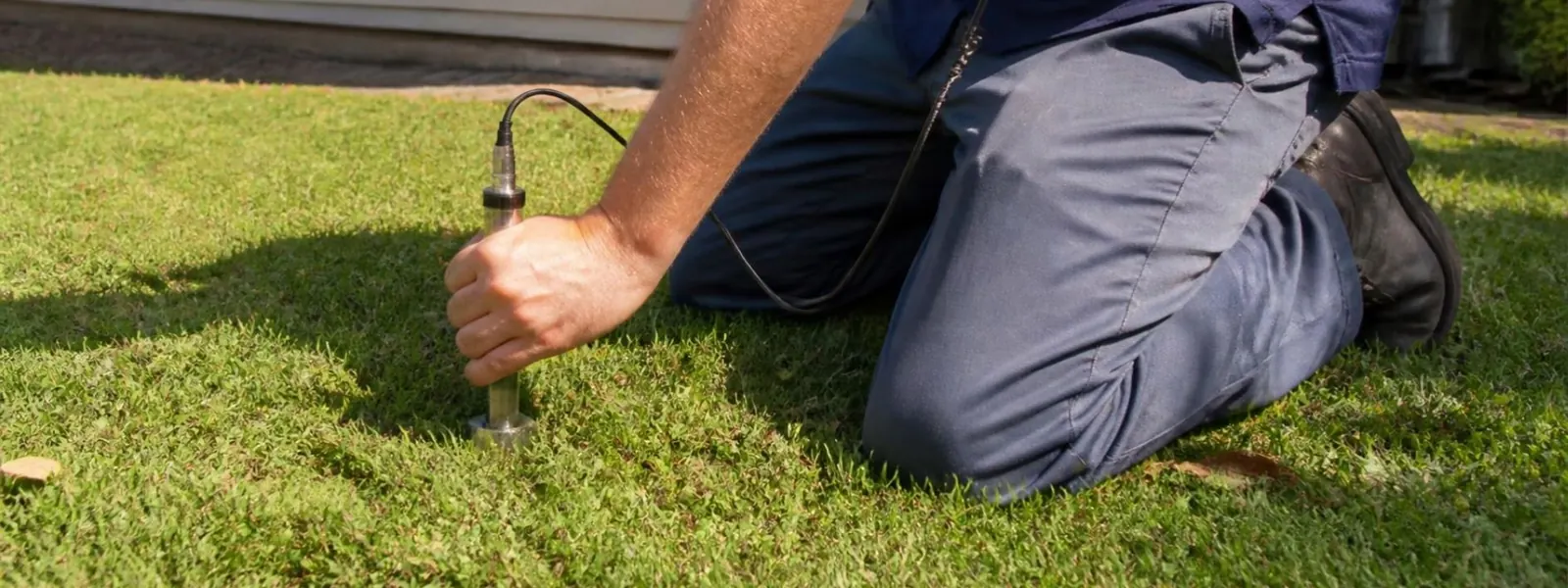
Our leak detection service in Romeoville, IL answers calls 24/7 because a hidden leak does not wait for business hours. A pinhole in a pressurized line can pour out hundreds of gallons a day. The goal is to find the exact spot, so the repair is small instead of a trench or a torn-out wall.
Water is leaking right now: first steps
- Shut off the main water valve, usually near the meter or where the line enters the basement.
- Turn off the water heater power or gas if the tank may drain.
- Keep clear of wet outlets and light fixtures, and switch off the breaker if water reaches electrical items.
- Photograph the damage for your records, then call dispatch.
Meter still running and the bill keeps climbing
A high water bill with no visible cause is the most common reason people call us. You can test for a leak in ten minutes. Turn off every faucet and appliance, then look at the meter. If the low-flow dial or triangle keeps moving, water is escaping somewhere.
Next, shut the main valve at the house. If the meter stops, the leak is inside. If it keeps moving, the leak is on the buried line between the meter and the house. A running toilet flapper is the cheapest culprit, so check those first. Ask your water utility for your recent usage history to see when the jump started.
Slab leaks: warm floors and the sound of running water
Where a house sits on a concrete slab, supply lines can run through or beneath it. A leak there shows up as a warm spot on the floor, a damp carpet edge, or water noise when every fixture is off. Hot lines leak more often and heat the concrete above them.
We trace the line with electronic listening gear and pressure checks, then mark the spot on the floor. The fix may be a break-through repair at that point or a reroute through the walls and attic. We lay out both choices and what each involves before work begins.
Ceiling and wall leaks
A brown ring on a ceiling or a bubbled patch of paint tells you water is present, not where it started. Water travels along joists and pipes before it shows. A moisture meter and thermal camera narrow the source, so we open one small access hole instead of several.
Upstairs bathrooms, supply lines in exterior walls and roof penetrations are all common sources. Roof leaks belong to a roofer, and we will say so if the readings point there.
Under-house and crawlspace leaks
Crawlspaces and the open joist bays above basements hide leaks well. Signs are a musty smell, sagging insulation, rust on fasteners or damp soil. Pipes in unheated spaces can also split in a hard freeze, which the burst pipe repair page covers in more detail.
We check supply, drain and water heater connections in the space and look for condensation on cold lines, which can mimic a leak. A small repair is often possible from below with no floor damage.
Buried line leaks between the meter and the house
The service line carries water underground from the meter to your home. A leak in it can soften the lawn, lower pressure, or make the meter spin while the house is dry. Ground that freezes and thaws each winter can stress joints and old connections.
We use ground microphones and correlation to locate the break within a few feet. When the line itself is failing, see water service line repair and replacement for the next step.
| Where you think it is | What we use | What you may notice first |
|---|---|---|
| Inside a wall or ceiling | Moisture meter, thermal camera | Stains, bubbling paint, musty smell |
| Under a slab | Acoustic listening, pressure test | Warm floor spots, running sound at night |
| Crawlspace or joist bays | Visual check, moisture readings | Damp soil, rusty fasteners, mold odor |
| Buried supply line | Ground microphone, line correlation | Soft lawn, low pressure, meter spinning |
| Fixture or appliance | Pressure isolation of each branch | Drips under sinks, wet washer hose |
Sprinklers, pools and yard leaks
Irrigation leaks often come from a cracked head, a failed valve or a split in the buried zone pipe. A wet patch that stays green all week points to one. Shut the irrigation supply and check whether the meter still moves.
A pool or spa losing water faster than evaporation may have a leak in its plumbing lines. We test the equipment lines, but we do not repair vinyl liners or shells. Meter-box leaks show up as standing water near the curb, and the utility owns the meter side of that connection.
Ready to find it?
Call the emergency line, tell dispatch where you see water or what the meter shows, and we will plan the right tools for the visit.
Call (630) 822-9290Signs you may have a hidden leak
- The water bill rises without a change in habits
- The meter moves with every fixture off
- Warm or damp patches on the floor
- Hissing or running sounds in the walls
- Low pressure at several faucets
- Mold smell in a closet, cabinet or crawlspace
Codes and permits
Finding a leak is diagnosis, not repair. Once the leak is located, the repair itself follows the Illinois Plumbing Code, and the Village of Romeoville building department can confirm whether a permit applies.
Before we arrive
- Shut off the main valve if water is actively spreading
- Switch off power to any wet area you cannot reach safely
- Photograph the damage for your insurer
- Note the water meter reading, wait 15 minutes with everything off, and read it again
What changes the price
- Where the leak is
- A fixture supply line is a small job. A line under concrete or fifty feet of yard takes more time and gear.
- Number of tests needed
- One clean result can end the search. Several suspect zones mean more isolation steps.
- Access
- Open crawlspaces and basements are quick to check. Finished ceilings need careful opening.
- Repair type
- Detection finds the leak. The repair is quoted separately, and you see the price before work starts.
- After-hours dispatch
- Evening and weekend calls can carry a different rate, stated before the truck leaves.
If the leak turns out to sit in a drain pipe, a camera inspection shows the pipe condition. We run the same tests for homes in Lockport.
Leak detection questions from Romeoville homeowners
Yes, including holidays. If water is flowing, close the main valve first, then call so dispatch can send the next available technician with listening gear.
Turn off every fixture and appliance, then watch the meter for a few minutes. If the dial or low-flow indicator keeps moving, water is escaping. Then shut the main valve to see whether the leak is inside or outside.
Usually only a small opening, and only after the tools narrow the location. We explain where and why before cutting.
Yes. Underground and in-slab leaks often leave no surface sign. The bill or the meter may be the only clue.
We test the plumbing lines around a pool or spa. We do not patch pool shells or liners, and we will say so if the leak is there.
Finding the leak and fixing it are separate steps. You get a price for each, and we can often repair it on the same visit if parts are on the truck.