
Most sewer lines are buried out of sight until they fail. A camera inspection turns that blind spot into a video you can watch. It is the fastest way to learn whether a backup comes from grease, roots, a crack or a sag, and it is a smart check before you buy an older home in Romeoville.
What the camera actually shows
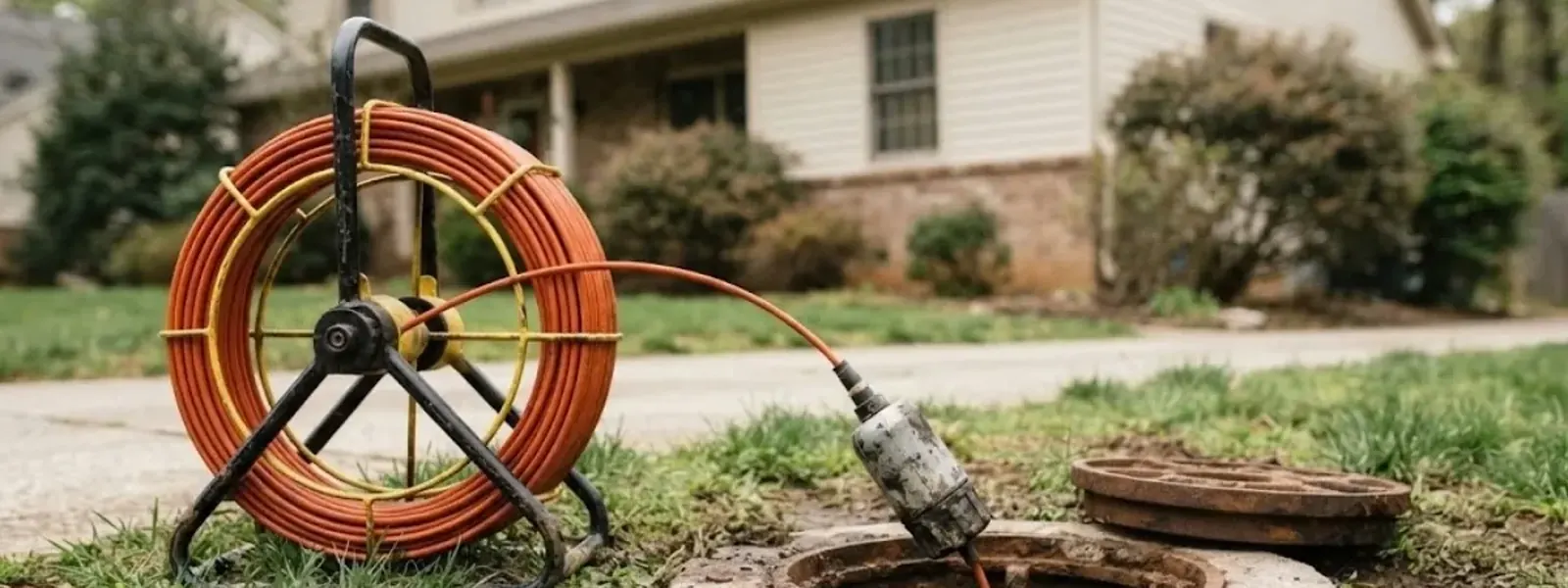
The camera head sits on a flexible rod with lights and a distance counter. It travels from a cleanout or a pulled toilet toward the street. As it moves, we note every joint, bend, sag and defect, and record the footage with the distance from the entry point.
| What appears on screen | What it usually means | Typical next step |
|---|---|---|
| Fine hair-like strands at a joint | Roots entering the pipe | Cut the roots, then repair or monitor the joint |
| A flat, dark line or standing water | A belly or sag in the run | Watch for repeat clogs or plan a section repair |
| A hairline split or missing piece | Cracked or broken pipe | Spot repair, lining or replacement |
| Rough orange scale on the wall | Corroded cast iron | Clean the scale and watch the condition |
| Clean, round pipe with smooth joints | A sound line | Keep the footage as a baseline |
Reasons to schedule an inspection
Good times to book a camera look
- Backups that return after each cleaning
- Several drains slow or gurgling together
- A sewer smell with no clear source
- Buying a home built before the 1980s
- Planning a basement bathroom or remodel
- A sinkhole in the lawn above the line
Before you buy a home
A standard home inspector does not usually run a camera through the lateral. A sewer scope can reveal a cracked line before closing, when you still have room to negotiate. Ask the seller for cleanout access and give us a window of a few hours. We give you the video and a plain summary.
Older areas such as Hampton Park, a subdivision developed in 1957, are exactly where a scope is worth the small cost. Pipes of that age may be clay or cast iron, and both can crack or flake with time.
How the visit works
- We locate a cleanout, or remove a toilet when none exists.
- The line is cleared enough for a clear picture. Heavy buildup may need a separate cleaning.
- The camera travels to the street connection while a locator tracks its depth and position above ground.
- We mark any defects on the ground if you want to see where they sit.
- You receive the recording and a plain-language explanation of what it means.
Backup in progress?
A camera works best on a flowing line. If water is rising now, call the emergency number and we will stop the backup first.
Call (630) 822-9290Locating the line and its depth
A locator picks up the camera transmitter from above, so we can mark the line on the lawn or driveway. That helps if a repair is needed. It also tells you how deep the pipe runs and whether it passes under a driveway, a patio or a tree.
Codes and permits
A camera inspection is a look, not a repair. Any repair that follows falls under the Illinois Plumbing Code, and the Village of Romeoville building department decides what needs a permit.
What changes the price
- Access
- A cleanout makes the job fast. Without one, we pull a toilet, which adds time.
- Line length
- A short run to the street takes less time than a long lateral.
- Cleaning first
- If grease or debris blocks the view, we clean before recording.
- Locating
- Marking the pipe's path above ground is an added step.
- Scheduling
- Planned weekday visits and same-day calls are priced differently, and we state the price first.
If the footage shows a break, the next step is sewer line repair. If it shows only grease or scale, hydro jetting may clean the pipe. We also run camera visits for buyers in Plainfield.
Sewer inspection questions from Romeoville homeowners
Many inspections take about an hour once the camera is in the line. A long lateral, a heavy blockage or poor access can add time.
Yes. You receive the recording along with a short explanation of any defects and where they sit along the pipe.
When a line is actively backing up, call the 24/7 line at any hour. We stop the backup first, and the camera run follows once water is flowing again.
Not always. It is worth doing when buying an older home, before a remodel, or if you have had even one unexplained backup.
It can show cracks, open joints and water entering the pipe. For leaks in pressurized water lines, our leak detection crew uses different tools.
No. The camera is a smooth, flexible head. We clear loose debris first so it does not snag.