
Most homes do not need a sewer line cleaned on a fixed schedule. They need it when the line shows a pattern of slow drains or when a camera finds buildup. Homes with known trouble, such as roots or a sagging section, benefit from regular cleaning that matches how fast the problem returns. A short risk check tells you which group you are in.
Start with a five-question risk check
- Is there a mature tree close to the path of the line between your house and the street?
- Is the home older, with clay tile, cast iron or an old fiber pipe under the yard?
- Has the main line backed up or slowed down before, even once?
- Does the household flush wipes, pour grease down the kitchen drain or run a disposal daily?
- Does the basement have a floor drain or a bathroom below the street level?
Count your yes answers. Zero or one puts you in the low-risk group. Two or three is medium. Four or five is high. The table below explains what each group should do.
| Your group | What it looks like | Reasonable approach |
|---|---|---|
| Low risk | Newer plastic pipe, few trees, no past backups | Clean when a symptom appears. Consider a camera look when you buy the house or before a remodel |
| Medium risk | One or two risk factors, a past slow drain | Schedule a cleaning if slow drains return, and add a camera look to learn the cause |
| High risk | Roots, old pipe and a backup history | Plan routine cleaning at a spacing set by what the camera shows, and review it after each visit |
The words reasonable approach are doing real work in that table. The right spacing for a high-risk line comes from watching how long it stays clear after a cleaning, not from a number in an article. If roots regrow in a season, you clean more often. If the line is still clear a long time later, you stretch the gap.
What actually fills a sewer line
Four things cause most slow main lines. Grease cools inside the pipe and coats the wall. Paper and wipes snag on rough spots. Roots enter through joints and grow into a mat. Scale from mineral-heavy water narrows the pipe from the inside. Each one needs a slightly different fix.
Grease and scale respond to high-pressure water, so a line with a history of both is often a candidate for hydro jetting. Roots are cut by a cable with a blade or by a jetter with the right nozzle. Wipes are pulled out and not repeated if the household stops flushing them.
Warning signs that override any schedule
Call for cleaning right away if you see
- Water backing into a basement floor drain, tub or shower when the washer drains
- A toilet that bubbles or gurgles when you run a sink
- Several fixtures slowing at the same time
- A sewage smell near the floor drain or cleanout
- Wet ground or a sunken patch in the yard along the sewer path
These signs mean the line is already restricted. A routine cleaning schedule is meant to prevent them. Once they appear, treat the visit as urgent, and shut off water use until the line is open.
A camera look beats a guess
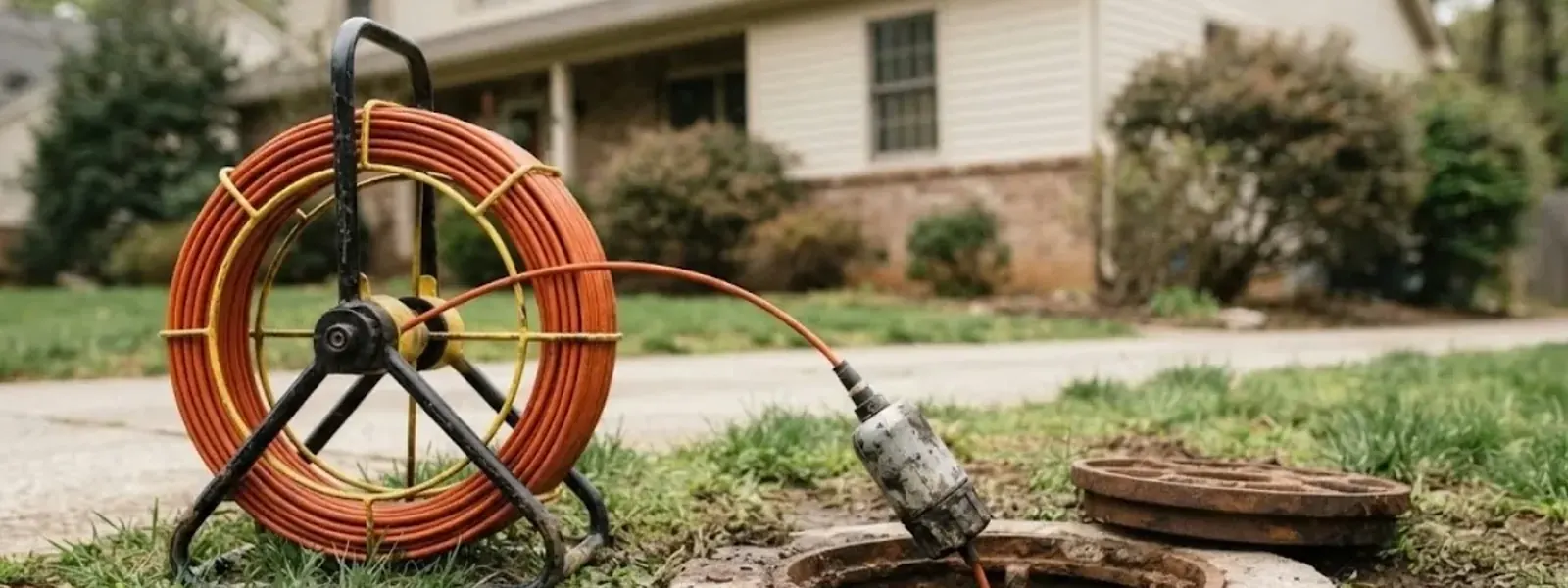
A sewer camera inspection shows what the line looks like right now. You see roots, cracks, offsets and grease on the wall, and you can keep the recording. It turns a guess about frequency into a decision. Many homeowners schedule one camera look and a cleaning together, then use the footage to set the next date.
Cleaning is not a fix for a broken pipe
Cleaning clears what is in the pipe. It does not repair a crack or a collapsed joint. If footage shows damage, the next step is a repair conversation, and no cleaning rhythm will make up for it.
Why clear water in the sanitary sewer matters near Romeoville
Rain and snowmelt should stay out of the sanitary sewer, and Will County towns say so in their own rules. Lockport's city page on drainage states that sump pumps may discharge at least 10 feet from the property line, may connect to the storm sewer with Building Department approval, and may not be redirected to the sanitary sewer.
Joliet's public utilities department reports that it manages 598 miles of sanitary sewer. A system that large works hard in a heavy storm, and extra water from sump pumps or downspouts can push a home's line toward overload.
For a Romeoville homeowner, the tie-back is simple. If your sump pump or downspout drains into a floor drain or the sewer cleanout, tell the plumber. Ask the Village of Romeoville what its rules require, because clear water in a sanitary line makes backups more likely.
Ready to put your line on a schedule?
Call and tell us about the age of the pipe and any past backups. We recommend a cleaning, a camera look or both, and state the price first.
Call (630) 822-9290Habits that stretch the time between cleanings
- Put cooking grease in a can, not down the kitchen drain
- Bin wipes, even the kind labeled flushable
- Run hot water for a minute after washing greasy dishes
- Keep new trees well away from the sewer path
- Know where your cleanout is and keep it reachable
None of these replace a cleaning when the line needs one. They lengthen the time between visits, and that is where the savings come from. Households in Crest Hill and Joliet with older neighborhoods and mature trees often use the same habits, and the same camera-first approach.
Sewer cleaning questions from Romeoville homeowners
No. Spacing depends on pipe age, tree roots, past backups and household habits. A camera look after the first cleaning shows how fast buildup returns, and that sets the next date.
You can clear a simple clog at an accessible cleanout with a rented cable. Roots, long runs and unknown damage are better left to a plumber with a camera, because forcing a cable through a broken pipe makes things worse.
They may slow root growth in some lines, but they do not remove a root mass already in the pipe. We advise against using strong chemicals before a plumber looks at the line.
Lockport prohibits it, and the principle holds anywhere: clear water in a sanitary line raises the chance of a backup. Romeoville has its own rules, so ask the Village before you connect anything.
Yes. The emergency line is open 24 hours a day. Stop using water and call as soon as a drain begins to back up.
Yes. We dispatch from Romeoville and cover both cities for sewer cleaning and camera inspections.