
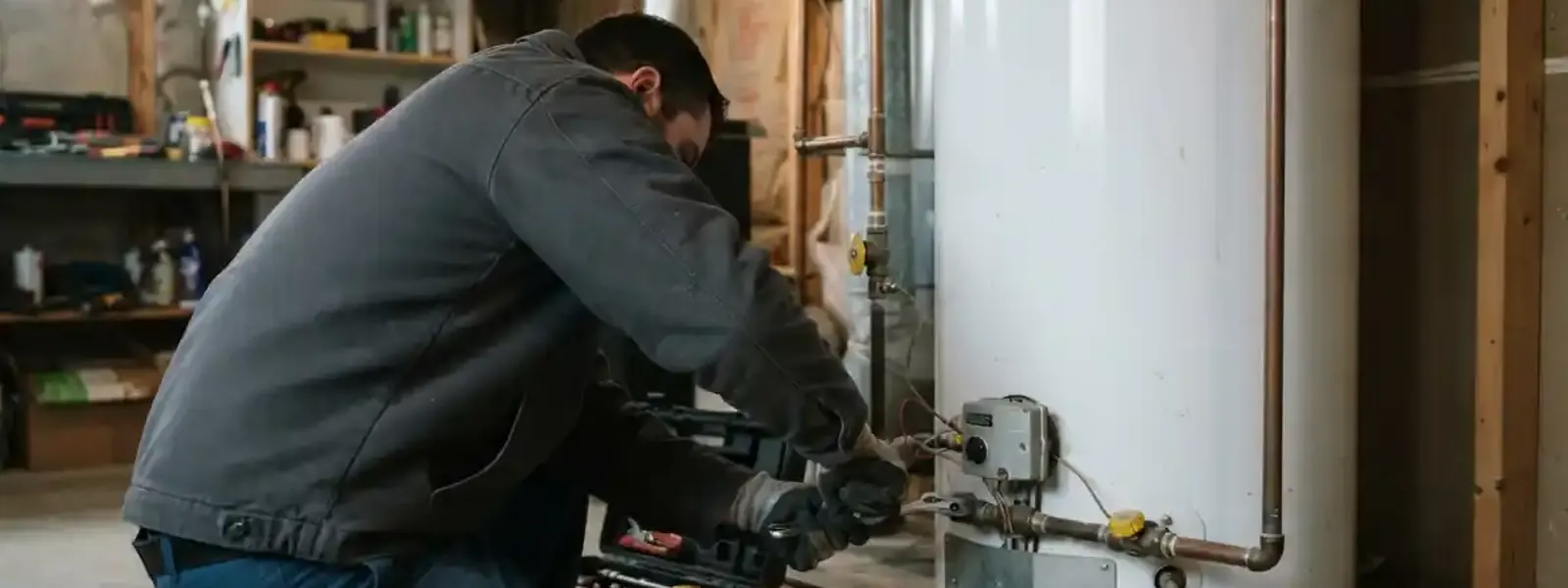
A replacement anode rod is the cheapest repair you can make to a tank water heater, and it is the one most owners never make. The rod hangs inside the tank and attracts the corrosion that would otherwise eat the steel walls. When it is used up, the tank becomes the target. Check it every few years, and replace it once the core wire shows.
Do it yourself or call a plumber?
Plenty of homeowners can do this job. It takes a socket, a breaker bar and an hour. But some situations turn a simple swap into a flooded utility room, so decide before you pick up the wrench.
| Your situation | Reasonable choice | Why |
|---|---|---|
| Tank is under ten years old, no leaks, top of the heater is easy to reach | DIY with the right socket | The rod usually turns out with steady force |
| Rod head is rusted solid or rounded off | Call a plumber | Forcing a seized rod can crack the tank fitting |
| Less than a foot of clearance above the tank | Flexible rod or a plumber | A straight rod cannot be pulled out in a tight space |
| Water stains or drips at the tank seams or base | Call about replacement | A leaking steel tank is past the point of a new rod |
| Tank is more than a dozen years old and never serviced | Inspect, then decide | The rod may be gone and the lining already damaged |
What you need before you start
- A replacement rod that matches your tank. Magnesium suits most homes and aluminum suits very hard water. A powered rod avoids the odor some homes get.
- A 1-1/16 inch socket for the hex head on most tanks, plus a long breaker bar or impact wrench.
- Thread sealing tape or the sealant the new rod calls for.
- A garden hose, a bucket and an old towel.
- Your heater manual, so you know where the rod sits and what the manufacturer says about it.
Step by step: swapping the rod
- Turn off power at the breaker for an electric heater, or set a gas heater's control to its pilot or off position.
- Close the cold water supply valve above the tank.
- Open a hot tap somewhere in the house so air can enter the system.
- Attach the hose to the drain valve and drain a few gallons, enough to bring the water level below the top of the tank.
- Find the rod's hex head on top of the tank. On some models it sits under a plastic cap or is part of the hot outlet nipple.
- Loosen the rod with steady pressure. A sharp jolt from an impact wrench often works better than a long pull.
- Lift the old rod out slowly, wrap the new one's threads with tape and thread it in by hand before snugging it down.
- Reopen the cold supply, let the tank refill with the hot tap running until water flows smoothly, then restore power or the gas control.
Do not skip the power and gas step
An electric element left live in a partly drained tank burns out in seconds. A gas burner firing into a low tank can overheat it. Always shut off the heat source before you drain.
How to read the rod you pulled out
A healthy rod is thick and mostly coated with a grey film. A rod that is half gone, pitted or bare steel along most of its length has done its job and needs replacing now. A rod that looks nearly new after several years means the water is gentle, or the rod is sealed against the water by scale.
Also look at what comes out with it. Flakes of scale or a gritty sludge in the bucket tell you the tank holds sediment. Flushing the tank in the same visit costs little and helps the burner or elements work less hard.
Romeoville note: what your water does to a rod
The Village of Romeoville's water quality report says a significant amount of naturally occurring minerals is dissolved in the supply, which comes from groundwater drawn from both shallow and deep wells. Dissolved minerals form scale on heating surfaces and speed up sediment in the tank. For you, that argues for checking the rod on the early side and flushing the tank when you do.
The report we reviewed did not state a hardness figure, so ask the Village for the full report or test your tap with a simple hardness kit. The number matters. Neighboring towns differ widely. Lockport's 2024 water quality report puts its hardness at 36 to 42 grains per gallon, while Plainfield's own water page says its Lake Michigan supply measures 6.3.
If you add a water softener later, tell the technician. Softened water can use up some rods faster, and a different rod type may suit the tank better.
When the rod is not the real problem
A new rod cannot save a tank that has already rusted through. Warning signs include rust-colored hot water, a rumbling or popping sound as sediment cooks, dampness at the base, and a tank that is well past its expected life. If you see those, a rod swap just delays the bill.
That is when water heater replacement makes more sense than another repair. If you are unsure which side of the line your tank is on, ask for an assessment through water heater repair, and we will tell you plainly.
Not sure what you are looking at?
Describe the tank's age, the rod head and any drips when you call. Dispatch will book the next open appointment.
Call (630) 822-9290A simple maintenance schedule
- Look at the rod every two to three years in homes with mineral-heavy water, and sooner if you notice odors or rust-tinted hot water.
- Flush a few gallons from the drain valve once a year to clear sediment.
- Test the temperature and pressure relief valve by lifting its lever briefly, with a bucket under the discharge pipe.
- Write the install date on the tank with a marker so you know its age at a glance.
We also take calls from Lockport and Plainfield, where the water differs from Romeoville's. A rod that lasts five years in one town can need attention in half that time in another, which is why the inspection beats the calendar.
Anode rod questions from Romeoville homeowners
There is no single interval. Many manufacturers suggest checking every few years. Because Romeoville's supply is mineral-rich groundwater, a check every two to three years is a sensible habit, with replacement once the rod is mostly consumed.
It can contribute. Bacteria in the tank can react with a magnesium or aluminum rod and produce a sulfur odor. A flush and a different rod type, such as an aluminum-zinc or powered rod, often cures it.
Stop before you strip the head. Spraying penetrating oil and letting it soak helps. If it still will not move, a plumber can use an impact tool and the right support at the fitting to avoid cracking the tank.
No. A rod protects steel that is still sound. Once water seeps through the tank wall, the damage is done and the tank needs to be replaced.
It can. Softened water tends to wear rods faster, so people with softeners often check them more often. Ask the technician to match the rod to your setup.
A rod swap does not move or replace the heater, but permit rules vary for any water heater work. Ask the Village of Romeoville Building Department, which enforces the 2014 State of Illinois Plumbing Code it has adopted.