
When a toilet keeps clogging, ask one question first: is it only this toilet, or are other drains slow too? A single toilet that clogs with normal use points to the bowl, the trap or the way it flushes. Several fixtures that struggle together point to the drain line behind them. That one answer saves you from guessing at the fix.
Step one: is it the toilet or the line?
| What you notice | Where the problem probably is | Next move |
|---|---|---|
| Only one toilet clogs, other drains run fine | The toilet's trap or flush | Inspect the toilet, try the checks below |
| The toilet gurgles when a sink or tub drains | The shared drain line | Have the line cleaned |
| Water rises in a tub or floor drain when you flush | A restricted main line | Stop using water and call |
| Every toilet in the house clogs | The main drain or building sewer | Call for cleaning and a camera look |
| Toilet clogs only after guests or heavy use | Habits and a weak flush | Review what is going down, then test the flush |
Checks for a single stubborn toilet
Watch the flush
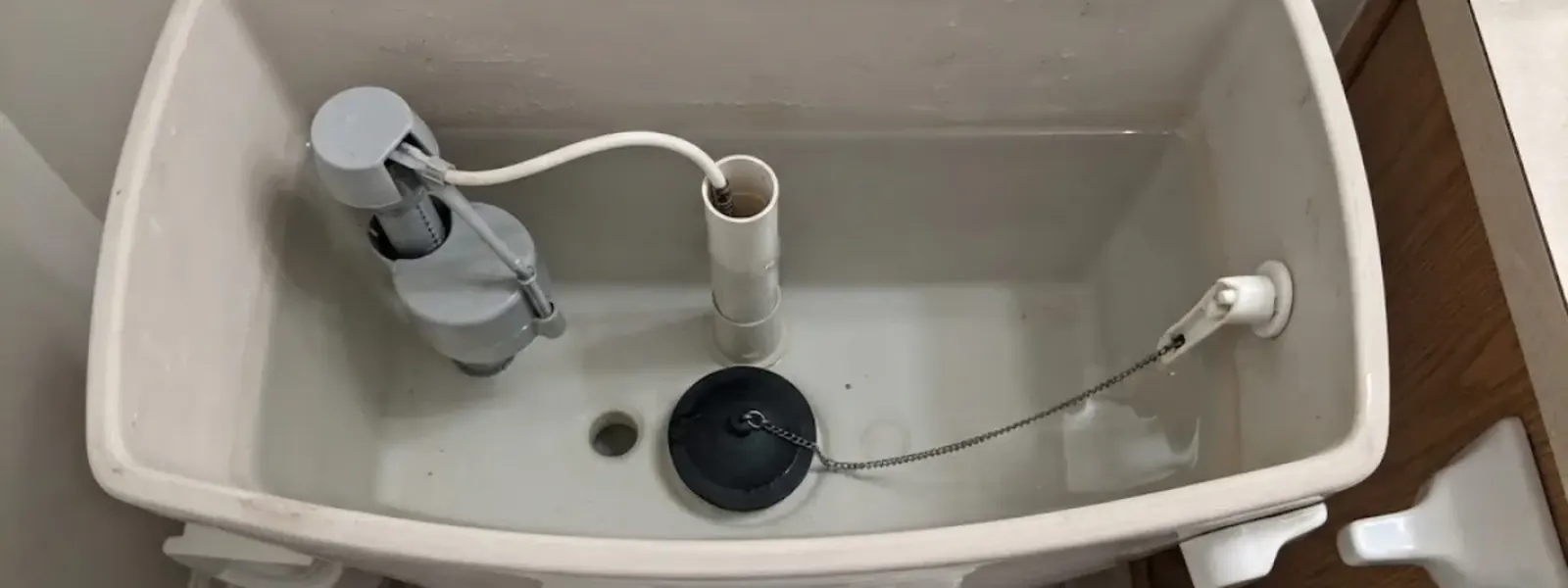
Flush with the lid off the tank and watch. The bowl should empty with a strong swirl, then refill. A weak flush that leaves water high in the bowl suggests blocked rim holes or a partly closed fill valve. Mineral scale clogs the small holes under the rim and the siphon jet at the bottom of the bowl.
Check the water level in the tank
If the tank water sits too low, the flush has less force. Look for a fill line marked inside the tank. Raise the float if the level is under that mark. A level that rises past the overflow tube is a fill valve fault and a different repair.
Look for something stuck in the trap
Children's toys, a cotton pad or a cleaning brush head can lodge in the curved passage at the bottom of the bowl. A closet auger, not a drain snake, is the tool made for this. It has a protective sleeve that keeps the porcelain from scratching.
Use the right plunger
A flange plunger has a rubber flap that fits the toilet outlet. A flat cup plunger made for sinks does not seal as well. Press slowly to push water, then pull back sharply. Several slow strokes work better than a few hard ones.
If the closet auger finds nothing and the flush looks strong, the toilet itself may be the culprit. Older low-capacity bowls can have a weak siphon, and the fix is a toilet repair or replacement with a model that suits your drain.
When the drain line is the real cause
A toilet drains into the same line as the tub, the sink and often the washer. If that line has roots, a buildup of paper or a sag, every fixture suffers, but the toilet shows it first because it moves the most water at once. The tell is a gurgle in one fixture when another drains.
Signs the drain line is restricted
- A bubbling sound from the toilet when the washer runs
- Water backing up in the tub after a flush
- Two or more bathrooms slowing at once
- A clog that returns within days of being cleared
- Sewage smell near a basement floor drain
In that case no plunger will help for long. A cable or a jetter has to open the line, and a camera look shows whether roots, a crack or a low spot caused it. Our drain cleaning crew starts with the cleanout and works toward the toilet.
What should and should not go down
- Toilet paper and human waste only
- No wipes, including those sold as flushable
- No cotton balls, swabs, dental floss or hair
- No paper towels, which do not break down like toilet paper
- No feminine products or diapers
Wipes are the most common reason a line clogs again and again. They do not break down, and they wrap around roots and rough joints until they form a plug. If the household cannot stop using them, keep a bin by the toilet.
When the blockage is not yours: municipal sewers near Romeoville
Not every backup starts on your property. Plainfield's public works department says it maintains over 200 miles of sewer main and 16 wastewater pumping stations, and it asks residents to call it about sewer problems, with an after-hours line for urgent ones. Lockport's Public Works sewer division handles collection of sewage and maintenance of the collection system.
The tie-back is a quick test. If your neighbors on the same street have backups too, or the cleanout in your yard is clear and full of water, the blockage may be in the public main. Call the municipal utility that serves your home.
For a Romeoville address, ask the Village public works department for its sewer problem and after-hours numbers, and keep them next to this plumber's number. A cleaned private line will not help if the main in the street is the problem.
Toilet clogs again and again?
Tell dispatch how often it happens and what else is slow. We decide whether to start at the toilet or the cleanout, and quote before we begin.
Call (630) 822-9290When to stop DIY and call
Stop if water rises when you flush, if a plunger and an auger fail to clear the bowl, or if sewage appears at a floor drain. Further effort can push the blockage deeper or spill wastewater into the house. The same applies to any toilet that clogs more than twice in a month.
Our teams cover Lockport and Crest Hill as well as Romeoville for repeat toilet clogs. The first visit usually answers the toilet-or-line question, and that answer tells you whether you need a repair, a cleaning or both.
Repeat toilet clog questions
Check for a weak flush first: scale in the rim holes, a low tank level or an old low-capacity bowl. If other drains are slow too, the problem is in the line behind the toilet.
It becomes one when water rises toward the rim or sewage shows in a tub or floor drain. Shut the valve behind the toilet, stop using water and call the emergency line.
We advise against it. The liquid can sit in a standing clog and splash when a plumber opens the trap. A plunger or closet auger is safer.
Call the Village of Romeoville public works department for the public main. If water is only backing up inside your house, call us to clear the private line.
It can, when an old bowl has a weak flush. It will not help if the drain line behind it is partly blocked, so confirm the line is clear first.
Yes. We dispatch from Weber Road and cover both towns at any hour for overflows and repeat clogs.