
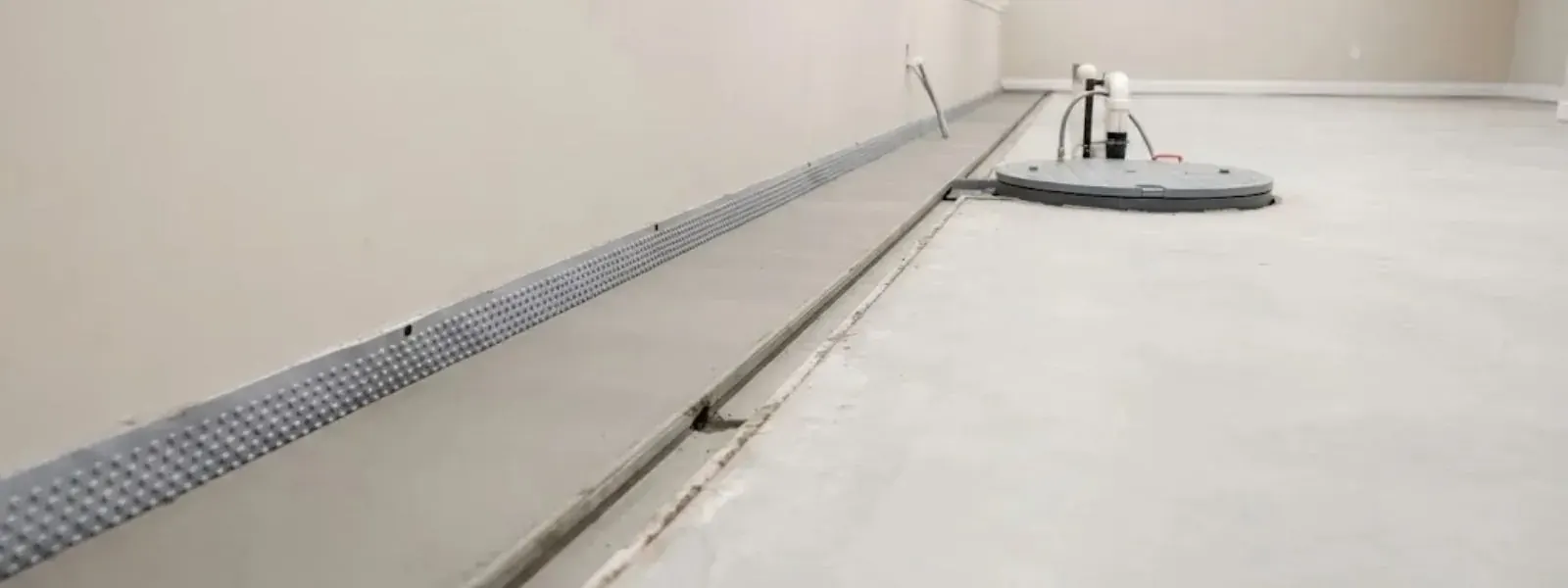
Basement waterproofing falls into three families. Exterior fixes keep water from reaching the wall. Interior systems catch water that gets in and send it to a pump. Repairs seal the specific cracks and joints where it enters. Many homes need a combination, and the cheapest effective step is often the least dramatic.
Start with the cheap fixes that cost almost nothing
Before anyone talks about trenching and membranes, rule out the basics. A surprising share of damp basements trace to water that is dumped at the foundation by the house itself.
- Gutters that overflow or leak at the seams
- Downspouts that end at the foundation rather than several feet away
- Soil that slopes toward the house instead of away from it
- Window wells with no cover, no gravel or a clogged drain
- Garden beds and mulch piled against the siding
Fixing these costs far less than any system on the list below. If a basement still takes water after they are done, you have a real waterproofing problem, not a drainage habit.
The main methods side by side
| Method | What it does | Best when | Limits |
|---|---|---|---|
| Grading and downspout extensions | Moves roof and surface water away from the wall | Damp walls after rain, with soil sloping toward the house | Cannot fix a high water table |
| Interior sealers and coatings | Slows moisture passing through the wall surface | Light dampness or efflorescence | Not a cure for water under pressure |
| Crack and joint injection | Seals individual leaking cracks from inside | A few leaking cracks in a poured wall | Does not stop new cracks |
| Interior drain tile and sump | Catches water at the footing and pumps it out | Seepage at the floor and wall joint, or recurring flooding | Manages water rather than keeping it out |
| Exterior membrane and drainage | Excavates and seals the wall from outside | Wall failure or severe, repeated leaks | Costly, disruptive and best for the worst cases |
| Window well and area drain repairs | Keeps water from collecting at openings | Leaks at windows and doors below grade | Only handles that location |
Match the symptom to the method
- Damp but not wet after heavy rain, with a white powder on the wall: start with grading, gutters and a sealer.
- A thin line of water where the wall meets the floor: interior drain tile and a sump are the standard answer.
- One crack with a steady trickle: injection, plus a look at why that spot takes water.
- Several walls weeping, bowing or cracking: have the structure evaluated before spending on waterproofing.
- Water rising from the floor during storms: a sump pump and basin, with a backup for power outages.
- Water at a window well: clear or repair the well drain and extend it away from the house.
Know what a plumber does and does not do
We install and repair sump basins, pumps, drain connections and the plumbing side of interior drainage. Structural wall repair, such as bowing walls or major foundation cracks, belongs to a foundation or structural specialist, and we will say so if that is what your basement needs.
Romeoville note: what the Village says about runoff and permits
The Village of Romeoville's Storm Sewer Program page explains that rain falling on yards runs off to the street and into the storm sewer. Water leaves your lot only if the grade lets it. If your lawn slopes toward the house instead of the street, it cannot follow that route, and the foundation takes the load.
The Village also offers an online stormwater drainage concern report on its Stormwater Reports page. If water is pooling in the street or a roadside swale near your property, report it there instead of trying to solve it on your side of the property line.
Permit rules for waterproofing and drain work are not spelled out on the pages we reviewed, so call the Village Building Department before you start. It enforces the 2014 State of Illinois Plumbing Code that the Village lists as its adopted plumbing code, and a licensed plumber can tell you which parts of a job it touches.
How interior drain tile and a sump work
A channel is cut along the inside perimeter of the slab, a perforated pipe is laid in gravel, and the floor is patched. Water that reaches the footing flows into the pipe and runs to a sump basin, where a pump sends it outside. It does not stop the water from reaching the wall. It gives it a place to go before it reaches the floor.
That is why the pump matters as much as the pipe. A system with a weak or old pump can be defeated by one bad storm. If you already have a sump, our sump pump repair visit checks its capacity, check valve, discharge line and backup.
Questions to ask any contractor
- Where exactly is the water entering, and how did you confirm that?
- Does the proposal address the cause, or just hide the symptom?
- Where will the pump discharge, and is that permitted?
- What happens during a power outage?
- Is the quote itemized so you can compare it with another one?
Want a second opinion on a quote?
Call and tell us what you were told. We will look at the basement and explain what the plumbing side of the work involves.
Call (630) 822-9290Why the fix depends on your block
Soil, grade and the age of the house vary from street to street, and so does the way nearby towns handle storm runoff. Plainfield's village stormwater plan, for example, sends runoff toward the DuPage River, and a basement near a creek or river reach faces different pressure from one on high ground. Our basement waterproofing work starts with a look at your site rather than a standard package.
If you live in Joliet or Plainfield, we cover those towns as well, and the same method-to-symptom logic applies. Only the water table, the soil and the local drainage change.
Waterproofing questions from Romeoville homeowners
The Village of Romeoville provides an online stormwater drainage concern report on its Stormwater Reports page. Use it for pooling in the street, blocked inlets or roadside drainage, and call Public Works for questions.
A sealer helps with light dampness. It will not hold back water that pushes through the wall under pressure. If you see running water or puddles, you need drainage, not paint.
It does not stop water from reaching the wall. It collects water at the footing and sends it to a sump pump before it spreads across the floor.
It makes sense when the wall itself is failing or when repeated leaks defeat interior systems. It involves digging around the house, so it is usually kept for the worst cases.
A plumber handles the drainage side: sump basins, pumps, drain lines and connections. Crack injection and structural work are often handled by specialists, and a good plumber will tell you which is which.
Tape a square of plastic wrap to the wall for a day or two. Moisture on the room side means humidity. Moisture under the plastic means water is moving through the wall.