
Leak detection is how a plumber finds water escaping from a pipe you cannot see. Instead of guessing and opening walls, the technician narrows the search with listening gear, pressure tests, thermal imaging or a camera, then marks the spot. You pay to open one small area rather than three.
Most people call after one of four clues: a water bill that jumped, a meter that keeps moving when everything is off, a warm patch on the floor, or a stain on a ceiling. Any of them is worth a short test before you spend a dollar.
Run this meter test first
- Turn off every tap, the dishwasher, the washing machine and the ice maker. Check that no toilet is running.
- Open the meter cover and look at the small leak indicator, usually a triangle or a tiny wheel. Note whether it moves.
- If you have a reading dial, write down the number and wait thirty minutes without using water. Check it again.
- If the number changed or the indicator keeps turning, water is leaving somewhere. Close the main shutoff and watch the meter again.
- If the meter stops with the main closed, the leak is inside your house. If it keeps running, the leak is between the meter and the shutoff.
That last step saves time. It tells the technician whether to start inside the walls or out in the yard under the service line.
How the main methods work
| Method | What it does | Best for |
|---|---|---|
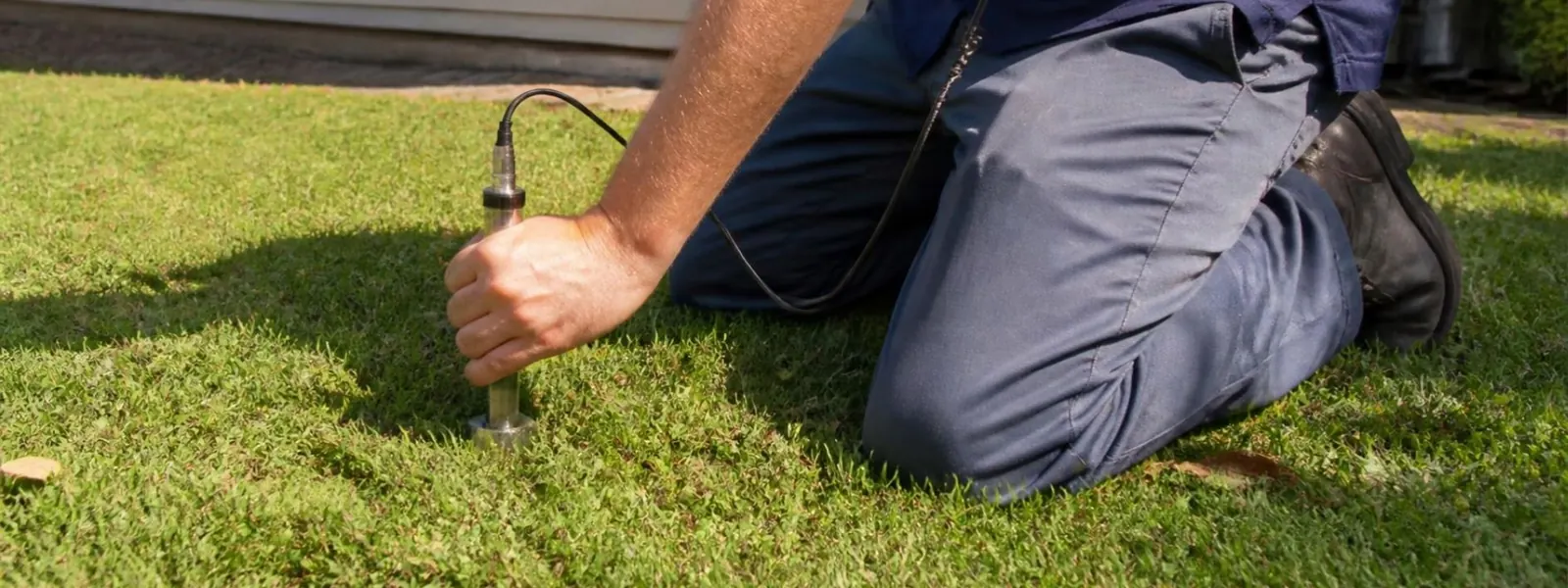
| Acoustic listening | Microphones pick up the hiss of pressurized water escaping a pipe | Slab leaks, buried lines and pipes behind finished walls |
| Pressure testing | Isolates a section of pipe and watches for a pressure drop | Confirming a leak and finding which branch holds it |
| Thermal imaging | Shows temperature differences from damp or hot-water leak zones | Ceilings, walls and radiant floor heat |
| Moisture mapping | Meters read dampness in drywall, wood and concrete | Tracing the edges of a stain back to its source |
| Camera inspection | A small camera travels inside drain and sewer lines | Leaks in drains, not supply pipes |
| Tracer gas | A safe gas is pushed into the line and sniffed out at the surface | Stubborn leaks that sound and heat cannot pin down |
Where hidden leaks tend to hide
The usual suspects are supply lines under a slab, joints behind a shower wall, a pinhole in a copper run, a water heater connection, and the service line that crosses the yard. Each calls for a slightly different tool. Under a slab, sound and pressure do most of the work. Behind a tile wall, thermal imaging and a moisture meter narrow things down quickly.
Irrigation lines and outdoor spigots leak too, and they are easy to overlook. A soggy corner of lawn that never dries between rains is worth a look.
Signs of a hidden leak
- A water bill that rises with no change in how your household uses water
- A meter that moves with every fixture off
- The sound of running water in a quiet house
- A warm or damp spot on a floor, or a patch of lawn that stays green and soggy
- Peeling paint, bubbling wallpaper or a musty smell in one room
- Low pressure at several fixtures at once
Romeoville note: where your side of the meter starts
The Village of Romeoville's drinking water quality report explains that the shutoff valve before the water meter is owned and maintained by the resident. For you, the meter is the dividing line for the test above: a leak after the meter is your repair, and the valve in front of it is your responsibility to keep working.
The same report lists its 2024 tap results for copper at 0.145 ppm against an action level of 1.3 ppm, and it names corrosion of household plumbing as a likely source of lead and copper. Corroded interior pipe is also a common site of pinhole leaks, so a copper-heavy house with a rising bill deserves a closer look.
The Village also publishes a service line material inventory on its water quality reports page. If you want to know what runs between the street and your meter, start there, then call Public Works with questions about the Village's side of the line.
What leak detection costs
We give a clear price before work starts, and it depends on a short list of factors. A visible, accessible leak is quick. A slab leak in a finished basement takes longer. The more rooms to cover, the more time the technician needs.
- How many areas must be checked, and whether you have narrowed it with the meter test
- Whether the suspect pipe is inside the house, under a slab or in the yard
- Access to the main shutoff and to the pipe runs
- Whether a camera or tracer gas is needed on top of listening gear
- Repair work that follows, which is quoted separately from the search
Insurance can respond to sudden water damage in some policies and not to slow seepage or wear. Read your policy and photograph the damage before anything is dried out.
Want the leak found before the bill grows?
A small leak running day and night wastes a lot of water. Call and we will book a detection visit.
Call (630) 822-9290After the leak is located
Once the spot is marked, the repair can be small. A single joint or a short section of pipe is often a quick fix. If the problem is the buried line, water service line repair may mean spot repair or a replacement section. Our leak detection visit ends with a plain description of what we found and what each option involves.
The same approach works in nearby towns. Homeowners in Crest Hill and Bolingbrook are on different water systems from Romeoville, so check which utility reads your meter and sends your bill before you call it about a spike.
Leak detection questions from Romeoville homeowners
The Village's water quality report says the valve before the meter is owned and maintained by the resident. If it leaks or will not close, it is your repair, so check that it turns before you need it.
The methods used to locate a leak are non-invasive. Listening, thermal and pressure tests do not cut anything. Opening a surface happens only after the spot is marked, and it is kept as small as possible.
Yes. A flapper that does not seal can pass many gallons a day without any sound. Drop a few drops of food coloring in the tank and wait fifteen minutes without flushing. Color in the bowl means a leak.
It shows temperature differences, not water itself. It works best for hot-water lines and for dampness that cools a surface. A technician confirms what the image suggests with a moisture meter or pressure test.
If water is running into a ceiling, flooring or electrical area, close the main shutoff and call at any hour. A slow, small leak can wait for a daytime visit, but do not let it sit for weeks.
Yes. A camera inspection can find cracks and offset joints in drain pipes. Supply leaks and drain leaks need different tools, so tell dispatch which kind of water you think is escaping.